
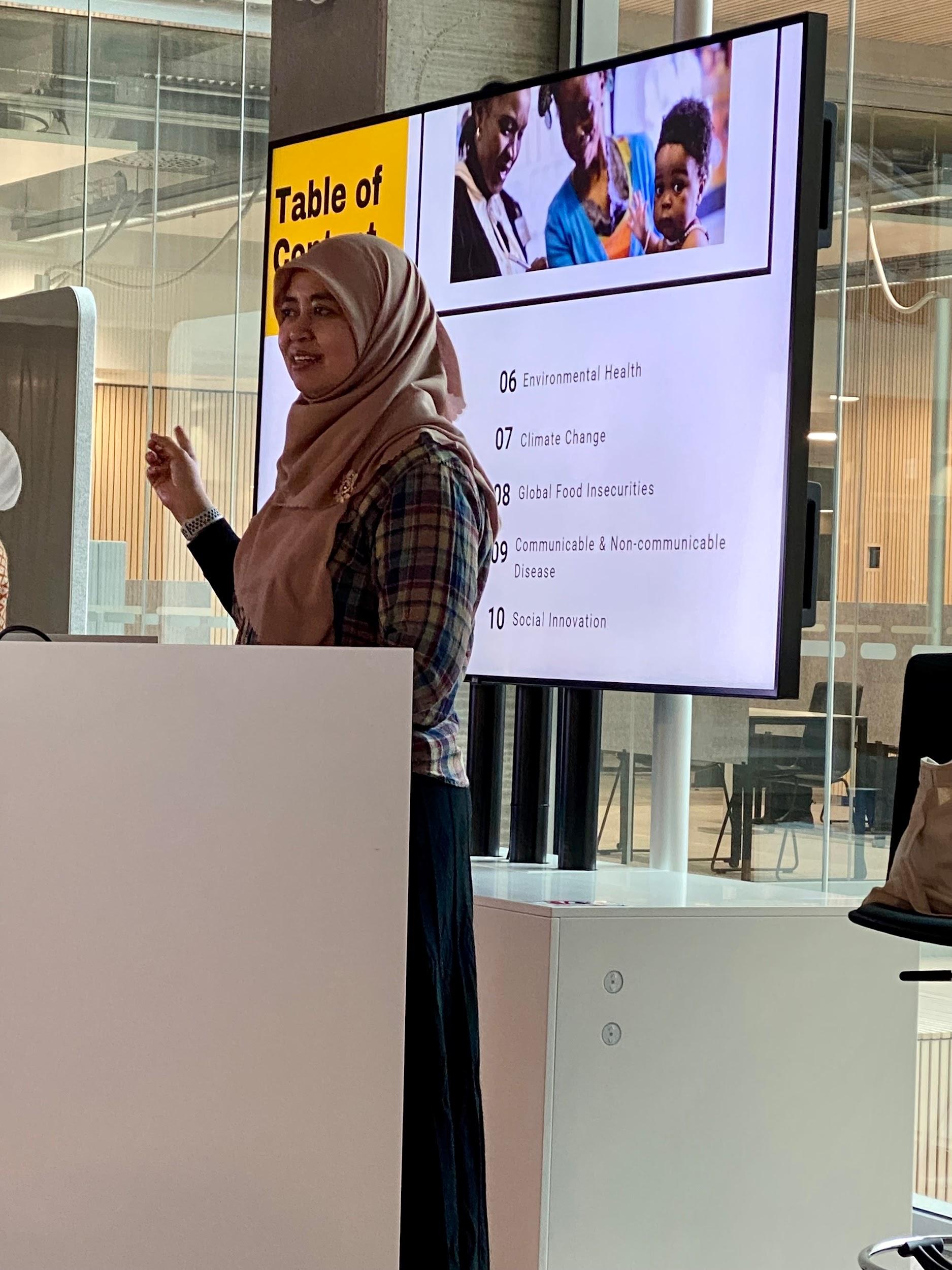
Overview of the Day by Tulii
We started today’s agenda with a warm welcome from the rector of Turku University of Applied Sciences in the Teoriatila Muunto EDU_4071 building.
Nelli Aaltonen: Perspective of Health Promotion to Planetary Health
Everything is connected, including humans and nature. The relevance of health promotion in the context of planetary health has gained prominence by encompassing not only individual and community well-being but also the broader ecological factors influencing both the planet’s health and that of its inhabitants.
In the realm of health promotion, planetary health involves a shift beyond individual behaviors and social determinants to incorporate the well-being of natural ecosystems essential for human health. This holistic approach acknowledges the interdependence of human health and the environment, aiming to tackle the intricate issues posed by climate change, biodiversity decline, and environmental deterioration.
Reconnecting with nature, we can bring nature to us, understanding what a good life is, and spending more time to enjoy nature to recover our mental health.
Promoting Healthier and More Sustainable Future
In striving for a healthier and more sustainable future, it is imperative to recognize the intricate interplay between human well-being and environmental integrity. This holistic approach demands a multifaceted strategy encompassing ecological, social, and economic sustainability.
From adopting system-wide approaches to promoting equity and justice, the journey towards sustainability requires inspirational leadership, resilient populations, and policies that prioritize both human health and environmental well-being.
Promoting a healthier and more sustainable future involves several key components:
- Sustainability (ecological, social, and economic)
- System approaches
- Equity and justice
- Health and sustainability lifestyle
- Inspirational leadership
- Resilience of population and health systems
- Policies advancing health and environmental health
Indri Susilowati: Workshop 1 / Planetary Health and SDGs
Prof Indri presented planetary health from an Indonesian perspective. We noticed some gaps between education and implementation about planetary health in the population. Additionally, the incorporation of this approach into university education has been still limited.
Budi Hartono: Workshop 1 / Environmental Health & Climate Change

Budi Hartono presented on public health leadership and management. We engaged on topics about air, water, and land, focusing on actions regarding sanitation that causes infectious diseases and behavioral exposure.
Helda: Workshop 1 / Communicable & Non-communicable Disease

Helda explained that environmental changes worsen communicable diseases like vector-borne illnesses and waterborne pathogens, impacting food security and nutrition, which leads to malnutrition-related health issues.
Additionally, environmental factors contribute to non-communicable diseases such as respiratory ailments and cancers.
Sanna Sainkangas: Planetary Health & Communicable Diseases
Planetary Health and Covid-19
It’s one of the seven coronaviruses that infected humans, with symptoms varying from mild to severe. Global drivers include:
- Population growth
- Climate change
- Agricultural work
- Urbanization
- Poverty and water stress
- Antimicrobial resistance (affecting treatment of Covid-19)
Antimicrobial Resistance
It is caused by genetic changes in pathogens. Because of many deaths in 2019, WHO formed GLASS (Global Antimicrobial Resistance and Surveillance System). The goals of SDGs include addressing environmental and climate threats, HIV, and other infectious diseases.
Key Messages
The day began with a warm welcome from Turku University of Applied Sciences’ rector. Insights on planetary health—from Nelli Aaltonen’s health promotion discourse to workshops led by Prof Indri Susilowati, Budi Hartono, Helda, and Sanna Sainkangas—highlighted the interconnectedness of human and environmental health.
Discussions revolved around sustainability, equity, and the impact of environmental changes on diseases. Addressing these challenges necessitates collaborative efforts, inspirational leadership, and resilient health systems for a healthier, more sustainable future.